Saturday, February 18, 2017

Klepsidra Cafe

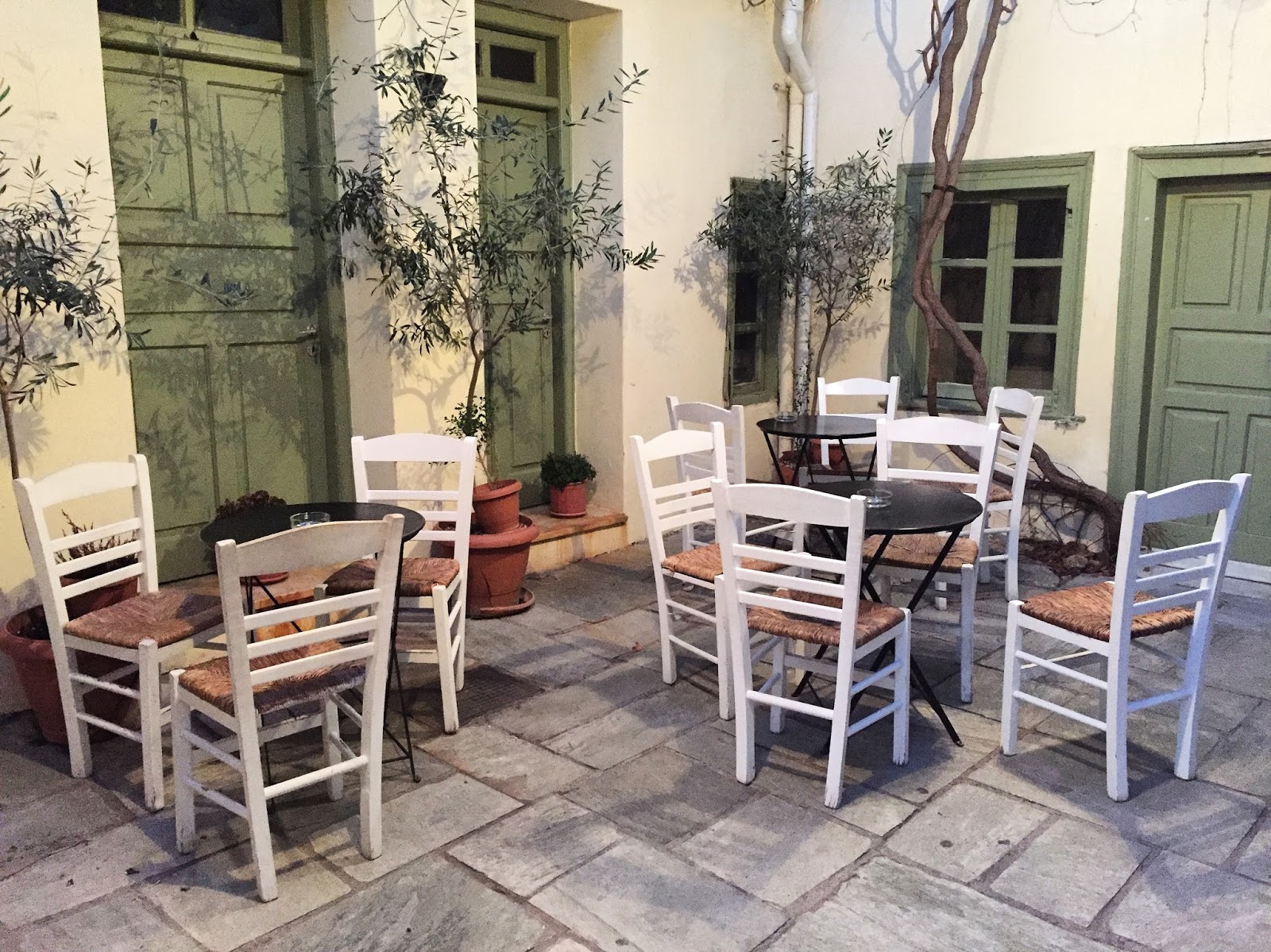
First stop at King George, a Luxury Collection Hotel, Athens. Second stop at a coffee place in the upper Plaka for Greek Coffee and special dessert. I really enjoy it and now I am a big fan of Klepsidra Cafe. Actually it was a pleasant stop. Here are some pictures:


Klepsidra Cafe. Yummy desserts!


Kuzina Restaurant.
Greek cuisine, a 2nd-floor art gallery & rooftop bar for cocktails with Acropolis view.


Ciccus.
Address: Adrianou 31, Athina 105 55

Plaka for ever


DaVinci Artisan Gelato-Quality Chocolate.
Davinci gelato is the best artisan gelato in Greece. Greek Fresh gelato, Healthy & Super Tastefull Products.


Electra Palace Athens.

Athens War Museum.


Church of Agios Georgios Rizarios. The church of Agios Georgios is located at Vasilissis Sofias avenue, next to the Metro station "Evangelismos". It is the church of the Rizarios Ecclesiastical School, which was founded in 1841 by the businessmen brothers, Manthos and George Rizaris. The church was designed by the architect Armodios Vlachos and belongs to the type of cross-in-square church with a dome. It is an example of the so-called Neo-Byzantine style with neoclassical elements.
(By Wikipedia)


Hilton Athens.

Petite fleur

First stop at Byzantine and Christian Museum and then to a cosy cafe "Petite Fleur" in the are of Pangrati. Pangrati or Pagrati is a neighborhood in the Municipality of Athens, Greece. It is bordered by the Kolonaki neighborhood to the west, the Ilisia neighborhood and the Kaisariani municipality to the north, the Vyronas and Dafni-Ymittos municipalities to the east and the Neos Kosmos neighborhood to the south. It is not to be confused as a separate suburb, as it is part of the City of Athens proper. However, it is frequently mistaken as such, possibly because of it bordering the actual suburbs of Vyronas and Kaisariani. One of the most important landmarks of Pangrati is the Panathinaiko Stadium that hosted the first modern Olympic Games in 1896. The First Cemetery of Athens, the official cemetery for the City of Athens, lies within Pangrati.
(By Wikipedia)

Here is the website: http://petite-fleur.gr/en/

Here are some pictures:

Byzantine and Christian Museum.


Best lemon pies ever at "Petite Fleur".


Friday, February 17, 2017

Beautiful sunny walk

Hellenic Armed Forces Officers Club.


National Garden.


Orea Hellas
From 1980s till now.
100 years later, the cafe reappears, into the social horizon of the city. The entrances are on Mitropoleos 59 street or on Pandrosou 36 street, near by the Monastiraki station.
It’s located inside the building of Greek Tradition Center on the first floor. Its re-establishment aims to the reviving of “Orea Hellas” as it was, to the atmosphere and the cultural climate of that cafe.
This is the place, where the elder Athenians find whatever is lost from the old cafe and the young ones discover a different environment, with references to tradition and the spectacular view of Acropolis and Plaka, above the roofs of Pandrosou street. In the landscape outdoors -on the balcony- those who are regular customers admire the former square Dimopratiriou, full of plants and cool breeze.
The whole atmosphere is overwhelmed with Hellenism evidence from the history of Romiosini (= greek word – Romios means Ellinas, so Romiosini is the noun). Lithographs, Engravings, paintings, photographs, drawings and papers decorate the place, completing the interior decoration: Stone, marble, bronze, wood. The cafe was created with the help of artists and crafters of our folk culture. The painter and cutter Nikos Gialouris was the editor of the signal and the cafe’s logo. The stonemasonries were made from Giannis Fitros and his sons. Giannis Fitros was working with Dimitris Pikionis (architect). From the website: http://oraiaellas.gr/


Balcony with a view. Lycabettus Hill.


Old Parliament House.
The Old Parliament building at Stadiou Street in Athens, housed the Hellenic Parliament between 1875 and 1935. It now houses the country' s National Historical Museum.
(By Wikipedia)


George I of Greece.
George I was King of Greece from 1863 until his assassination in 1913.
Originally a Danish prince, George was born in Copenhagen and seemed destined for a career in the Royal Danish Navy. He was only 17 years old when he was elected king by the Greek National Assembly, which had deposed the unpopular former king Otto. His nomination was both suggested and supported by the Great Powers: the United Kingdom of Great Britain and Ireland, the Second French Empire and the Russian Empire. He married the Russian grand duchess Olga Constantinovna of Russia and became the first monarch of a new Greek dynasty. Two of his sisters, Alexandra and Dagmar, married into the British and Russian royal families. King Edward VII and Tsar Alexander III were his brothers-in-law and King George V and Tsar Nicholas II were his nephews.
George's reign of almost 50 years (the longest in modern Greek history) was characterized by territorial gains as Greece established its place in pre-World War I Europe. Britain ceded the Ionian Islands peacefully, while Thessaly was annexed from the Ottoman Empire after the Russo-Turkish War (1877–1878). Greece was not always successful in its territorial ambitions; it was defeated in the Greco-Turkish War (1897). During the First Balkan War, after Greek troops had captured much of Greek Macedonia, George was assassinated in Thessaloniki. Compared to his own long tenure, the reigns of his successors Constantine, Alexander and George II proved short and insecure.
(By Wikipedia)

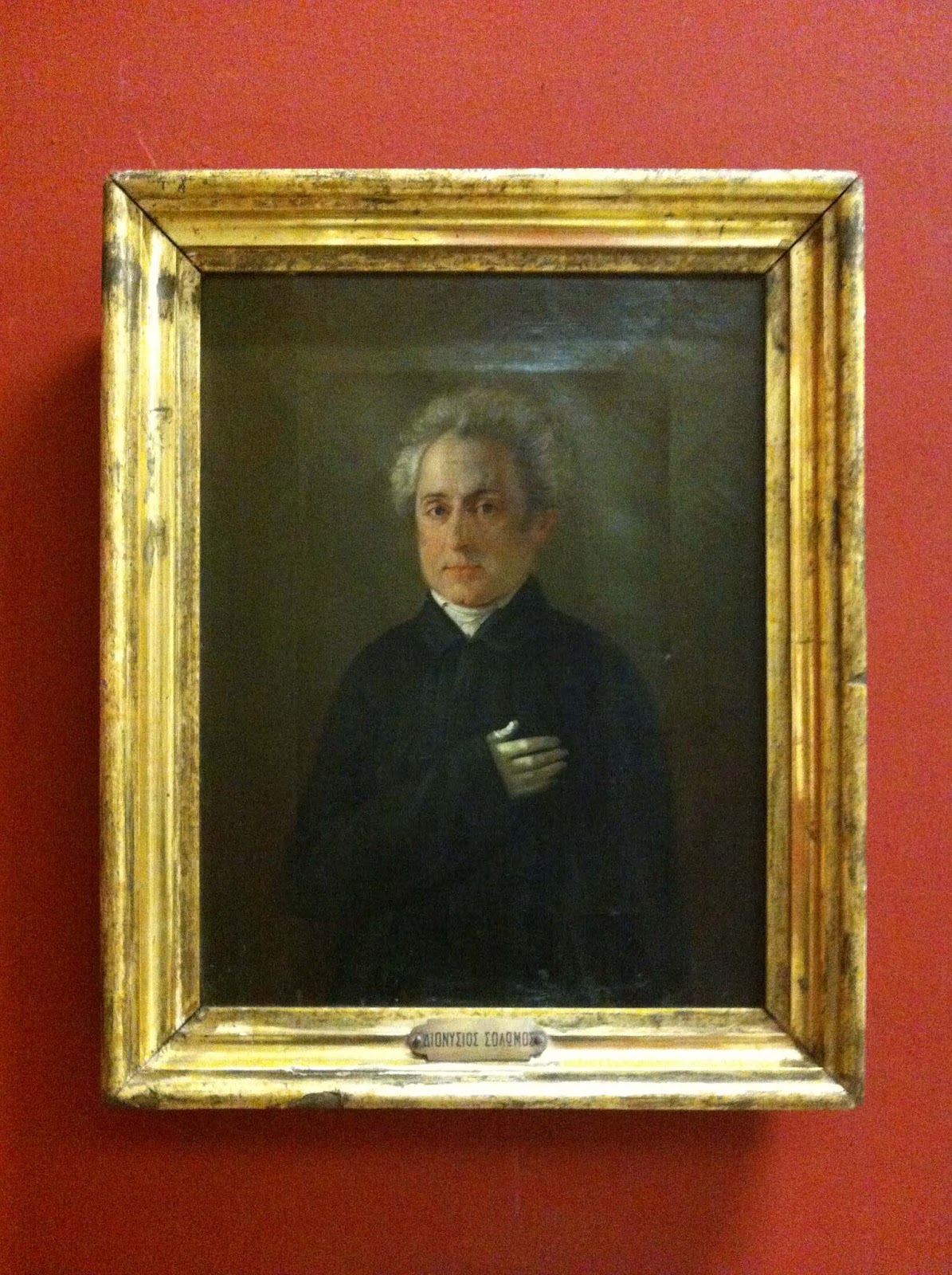
Dionysios Solomos Portrait.
Dionysios Solomos was a Greek poet from Zakynthos. He is best known for writing the Hymn to Liberty of which the first two stanzas, set to music by Nikolaos Mantzaros, became the Greek national anthem in 1865. He was the central figure of the Heptanese School of poetry, and is considered the national poet of Greece—not only because he wrote the national anthem, but also because he contributed to the preservation of earlier poetic tradition and highlighted its usefulness to modern literature. Other notable poems include (Τhe Cretan), (The Free Besieged) and others. A characteristic of his work is that no poem except the Hymn to Liberty was completed and almost nothing was published during his lifetime.
(By Wikipedia)

Bronze statue of Theodoros Kolokotronis, by Lazaros Sochos, in front of the Parliament House.


Technopolis (Gazi).